
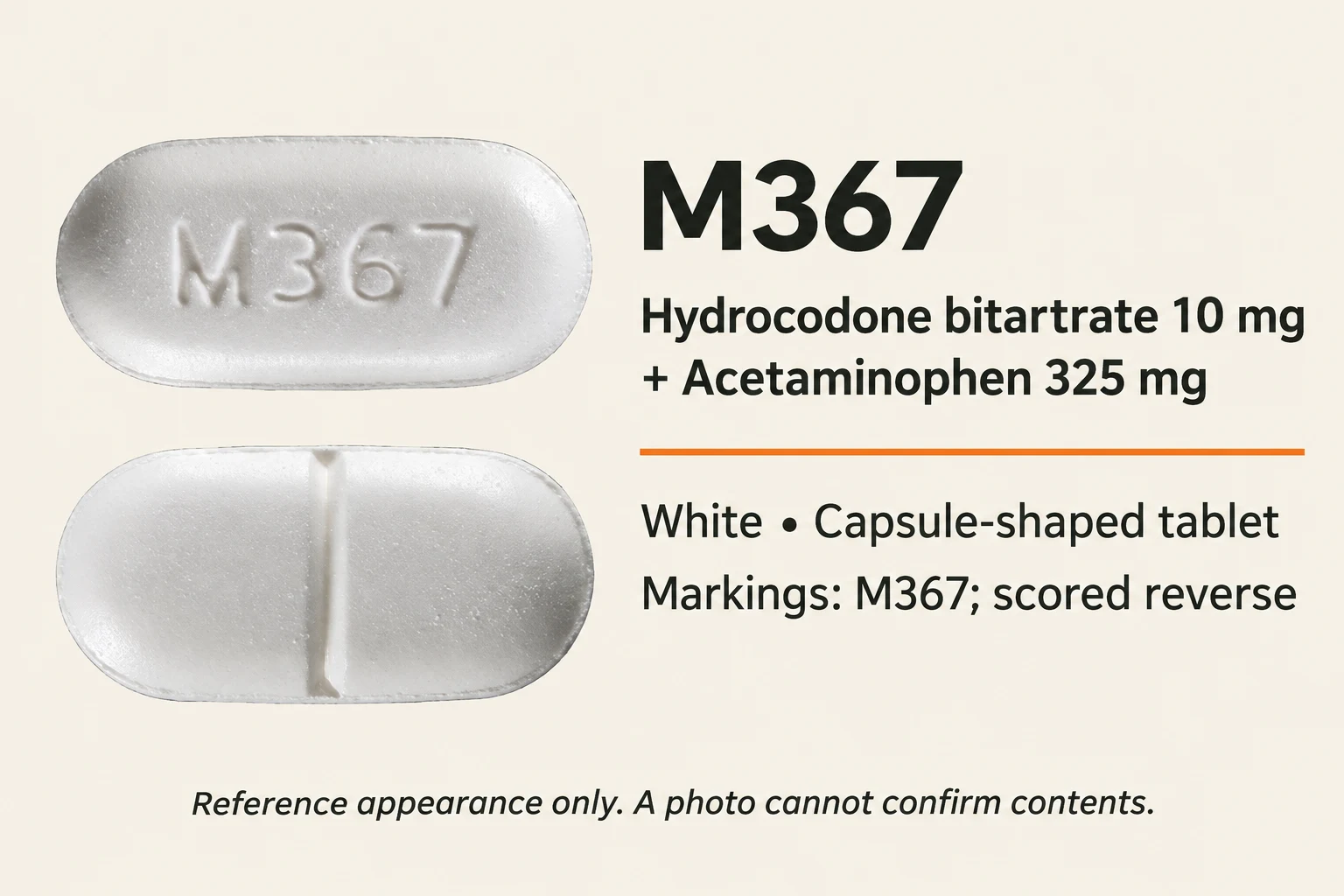
An M367 imprint raises a different concern from an ordinary over-the-counter pain reliever. The prescription product associated with this marking contains an opioid. Check for possible ingestion before trying to solve the whole story.
Key points
- The labeled M367 product combines hydrocodone 10 mg with acetaminophen 325 mg.
- A matching imprint or photograph cannot authenticate a loose pill.
- Possible ingestion comes before investigation: seek Poison Control or emergency guidance.
- Finding a pill does not, by itself, diagnose addiction.
First: is anyone at risk right now?
If someone has collapsed, is having a seizure, has trouble breathing, or cannot be awakened, call 911 immediately. For a possible pill ingestion or overdose without those emergency signs, call U.S. Poison Control at 1-800-222-1222. Do not wait to finish identifying the pill or make the person vomit. Poison Control first-aid guidance.
What the M367 imprint may mean
The labeled M367 product is a white, capsule-shaped tablet containing hydrocodone bitartrate 10 mg and acetaminophen 325 mg. It is a prescription pain medicine. A matching imprint does not prove that a loose pill has those ingredients or strengths. Read the DailyMed product label.
Two ingredients, two reasons to seek advice
Hydrocodone can dangerously slow breathing. Acetaminophen can damage the liver when too much is taken. Alcohol, benzodiazepines, and other sedating substances can add to opioid risks. A parent does not need to establish which ingredient is responsible before calling for medical guidance.
A legitimate prescription in the household may explain the tablet, but it is still important to establish whether it was prescribed to the person who has it. A pill offered by a friend cannot be verified by that friend’s description. CDC has documented an outbreak involving counterfeit tablets described as M367; that historical report is a reason to avoid visual reassurance, not proof about any particular tablet today.
Keep the pill secure while you get answers
Keep it away from children and pets, retain the packaging, and note where and when it was found. Do not taste, crush, or share it. Ask a pharmacist about the markings and any matching prescription; do not put an unverified pill into someone’s medication bottle. After any exposure assessment, ask about safe disposal of unwanted medicine.
A conversation you can start without blame
“I found a pill that may contain a prescription opioid. I’m concerned about safety, not trying to get a confession. Has anyone taken one, and where did it come from?” If it belongs to a current prescription, contact the dispensing pharmacist or prescriber about the concern. Do not independently change a prescribed treatment or create a withdrawal plan.
Frequently asked questions
Does finding M367 mean my child is addicted?
No. A single discovery cannot diagnose a substance use disorder. Possible ingestion needs immediate attention; repeated non-prescribed use, difficulty stopping, or continuing despite harm warrants a professional assessment.
Should I wait for symptoms before calling?
If an unknown pill or an excessive amount may have been swallowed, get advice promptly rather than waiting for symptoms. Poison Control can help assess the situation. Call 911 for trouble breathing, collapse, a seizure, or inability to wake the person.
What information should I have ready?
Keep the pill and its container available. Share the complete markings, your child’s age, symptoms, what may have been taken, the possible amount, and the time. Say when you do not know; do not delay a call to collect every detail.
What if my child says it belongs to someone else?
That may be true. Begin by checking whether anyone took it and where it came from. Keep the conversation calm, secure the medicine, and verify any prescription explanation with the appropriate adult or pharmacy. Repeated concerns deserve a healthcare assessment rather than a conclusion drawn from one discovery.
When your family needs a longer-term plan
Once immediate medical concerns are addressed, a discovery may lead to a larger conversation about stress, pain, access to medication, or substance use. You do not have to diagnose the problem before seeking support. Start with your child’s healthcare professional for clinical assessment. The Firm can help families organize their concerns, prepare a conversation, and consider appropriate next steps.
For ongoing non-prescribed opioid use or repeated safety concerns, our fentanyl and opioid intervention services help families prepare an organized approach to offering care. Family coaching can support communication and boundaries before and after that conversation. These services follow medical assessment; they do not replace emergency treatment or a clinician’s prescribing decisions.
Talk with The Firm about your family’s next steps. This consultation service is not emergency care or a pill-identification service.
Sources and further reading
DailyMed: medication labeling
DEA: counterfeit prescription pills
CDC: lifesaving naloxone
Poison Control: acetaminophen safety
CDC: historical counterfeit Norco poisoning outbreak
Educational information for parents, not an identification of a pill in your possession or a substitute for individualized medical advice. Sources checked November 4, 2026.
Photo reference: Drugs.com pill identifier. Graphic layout and background edited from the reference photograph; visual comparison cannot establish authenticity.