
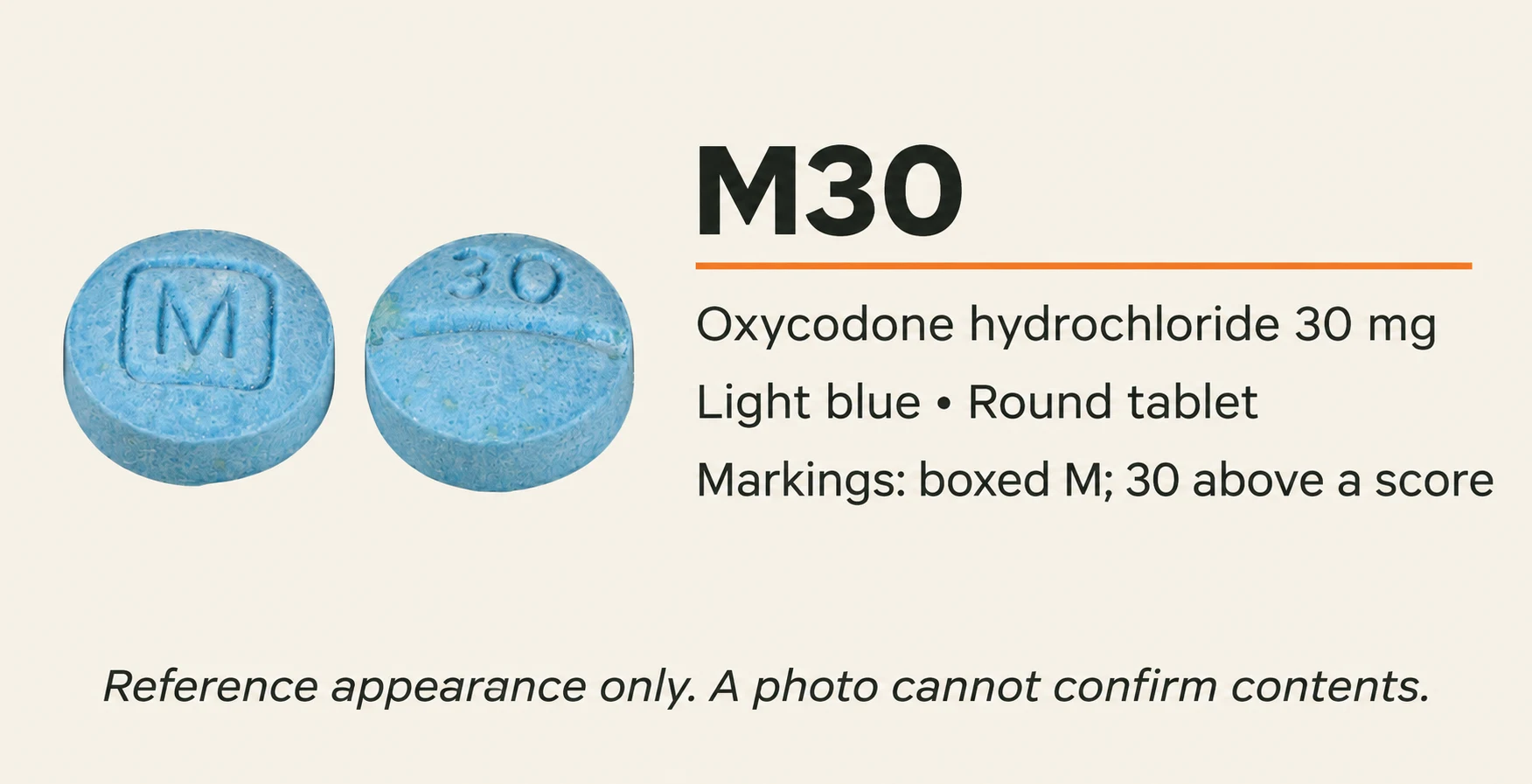
A blue tablet marked M and 30 may look like a prescription medicine, but counterfeit versions make appearance especially unreliable. If your child may have taken it, getting help comes before comparing photographs.
Key points
- The labeled blue M30 product contains oxycodone hydrochloride 30 mg.
- A matching imprint or photograph cannot authenticate a loose pill.
- Possible ingestion comes before investigation: seek Poison Control or emergency guidance.
- Finding a pill does not, by itself, diagnose addiction.
First: is anyone at risk right now?
If someone has collapsed, is having a seizure, has trouble breathing, or cannot be awakened, call 911 immediately. For a possible pill ingestion or overdose without those emergency signs, call U.S. Poison Control at 1-800-222-1222. Do not wait to finish identifying the pill or make the person vomit. Poison Control first-aid guidance.
What the M30 imprint may mean
The legitimate labeled product is a light-blue, round oxycodone hydrochloride 30 mg tablet, with a boxed M on one side and 30 above a score on the other. These markings describe a pharmaceutical product. They do not establish the contents of a tablet from an unknown source. Read the DailyMed product label.
The important question is its source
DEA warns that counterfeit pills can look like prescription medicines and may contain fentanyl or other substances. A familiar imprint, an intact shape, or a convincing photo does not verify authenticity. Neither “it came from a friend” nor “it was only one” resolves the safety question. Do not let anyone take another pill to test its effects.
Oxycodone itself can cause life-threatening slowed breathing, even when a product is genuine. If opioid overdose is suspected, call 911 and give naloxone if available, following its instructions. Stay with the person and follow the dispatcher’s directions. Improvement after naloxone does not remove the need for emergency care.
Keep the pill secure while you get answers
Keep it away from children and pets, retain the packaging, and note where and when it was found. Do not taste, crush, or share it. Ask a pharmacist about the markings and any matching prescription; do not put an unverified pill into someone’s medication bottle. After any exposure assessment, ask about safe disposal of unwanted medicine.
A conversation you can start without blame
“I’m worried about what could be in this, even if you were told it was a prescription. Have you taken any? Was anyone else with you?” Ask about other people who might also have taken pills so they can get help. Save the discussion about rules and consequences until immediate safety has been addressed.
Frequently asked questions
Can a photo show whether an M30 pill contains fentanyl?
No. A photo cannot establish a pill’s chemical contents. Do not use an online comparison or a visual match as permission to take it. A pharmacist can help interpret markings and prescription records, but appearance alone cannot authenticate an unknown tablet.
Should I wait for symptoms before calling?
If an unknown pill or an excessive amount may have been swallowed, get advice promptly rather than waiting for symptoms. Poison Control can help assess the situation. Call 911 for trouble breathing, collapse, a seizure, or inability to wake the person.
What information should I have ready?
Keep the pill and its container available. Share the complete markings, your child’s age, symptoms, what may have been taken, the possible amount, and the time. Say when you do not know; do not delay a call to collect every detail.
What if my child says it belongs to someone else?
That may be true. Begin by checking whether anyone took it and where it came from. Keep the conversation calm, secure the medicine, and verify any prescription explanation with the appropriate adult or pharmacy. Repeated concerns deserve a healthcare assessment rather than a conclusion drawn from one discovery.
When your family needs a longer-term plan
Once immediate medical concerns are addressed, a discovery may lead to a larger conversation about stress, pain, access to medication, or substance use. You do not have to diagnose the problem before seeking support. Start with your child’s healthcare professional for clinical assessment. The Firm can help families organize their concerns, prepare a conversation, and consider appropriate next steps.
For ongoing non-prescribed opioid use or repeated safety concerns, our fentanyl and opioid intervention services help families prepare an organized approach to offering care. Family coaching can support communication and boundaries before and after that conversation. These services follow medical assessment; they do not replace emergency treatment or a clinician’s prescribing decisions.
Talk with The Firm about your family’s next steps. This consultation service is not emergency care or a pill-identification service.
Sources and further reading
DailyMed: medication labeling
DEA: counterfeit prescription pills
CDC: lifesaving naloxone
Poison Control: acetaminophen safety
Educational information for parents, not an identification of a pill in your possession or a substitute for individualized medical advice. Sources checked November 4, 2026.
Photo reference: Northwestern University’s public-health explainer. Graphic layout and background edited from the reference photograph; visual comparison cannot establish authenticity.