
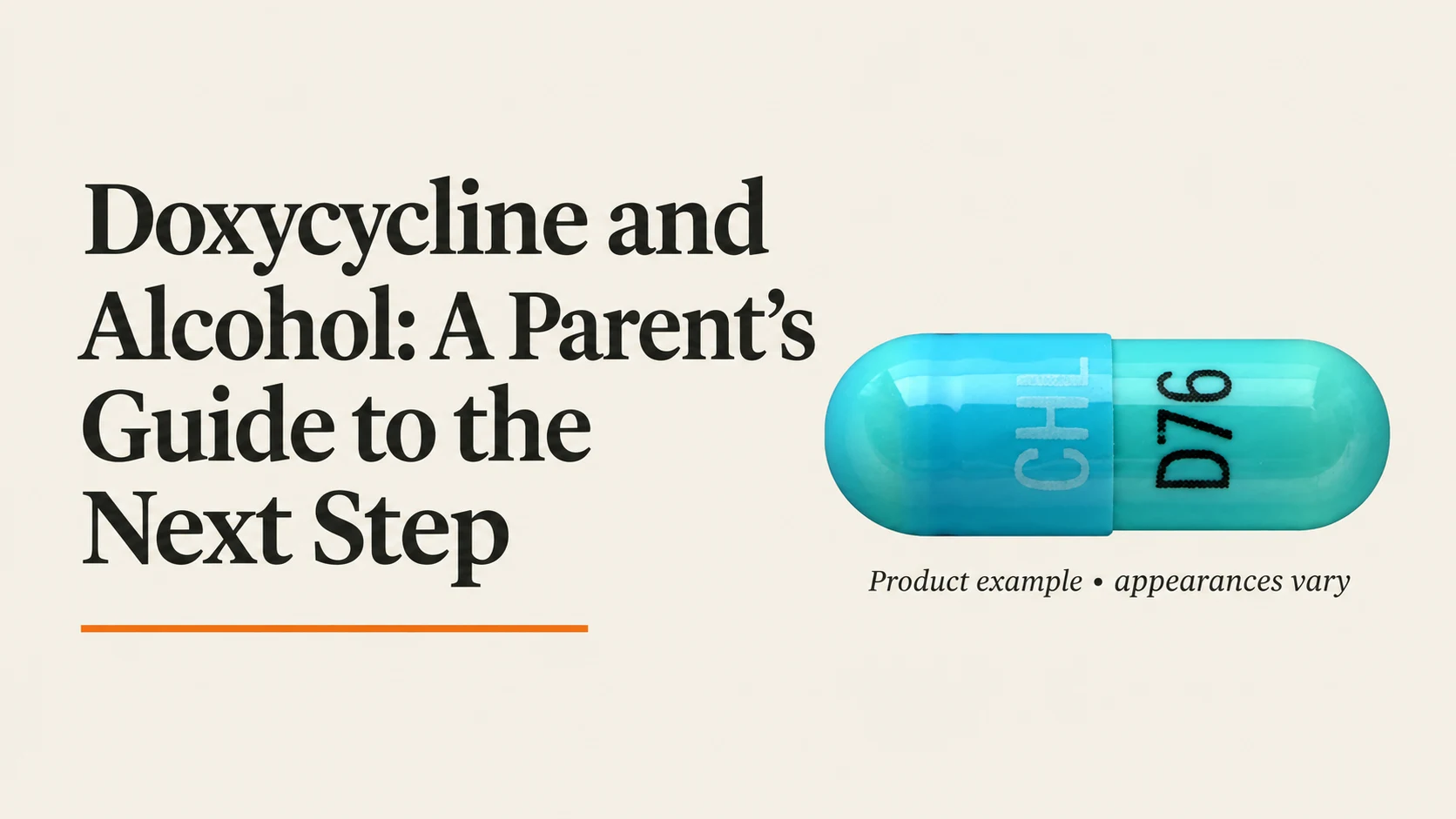
Alcohol can interfere with doxycycline working properly, which is why the NHS advises avoiding it during treatment. If you or a loved one finds that difficult, the concern goes beyond an antibiotic instruction. This guide explains the medication risks, when to get medical advice, and how to take the next step when drinking is becoming hard to control.
Key points
- NHS guidance recommends avoiding alcohol while taking doxycycline.
- Tell the prescriber about regular heavy drinking or alcohol dependence.
- Do not stop, double, or rearrange doses without advice.
- Breathing problems or inability to wake require emergency help.
Get urgent help: Call 911 if your child cannot be awakened, has a seizure, collapses, or has slow or irregular breathing. Do not assume they can sleep off an alcohol overdose. Stay with them and follow the dispatcher’s instructions (National Institute on Alcohol Abuse and Alcoholism, n.d.).
What makes doxycycline different?
The NHS advises avoiding alcohol because it can interfere with doxycycline working properly. It also identifies alcohol dependence as something the prescriber needs to know about (NHS, 2025b). That is why a general claim that alcohol is fine with antibiotics is not a reliable answer here.
An interaction warning does not tell a parent exactly what happened after one exposure. A clinician needs the dose, timing, drinking history, other products, and symptoms. Do not conclude that the infection treatment has failed—or that no harm is possible—from a single online statement.
Build a useful account for the pharmacist
Find the labeled container. Record when the most recent dose was taken, whether any doses were missed, and approximately when drinking began. Ask about other medicines or supplements without turning the questions into an interrogation. If your child does not know an amount, say that plainly.
Contact the pharmacist or prescriber for instructions about continuing treatment. Do not make up a waiting period, take extra tablets, or skip the next dose to compensate. If an excessive or unknown amount of medicine may have been taken, Poison Control at 1-800-222-1222 can provide individualized advice.
Respond to symptoms rather than the argument
Doxycycline can cause nausea and vomiting, and serious reactions can occur. Swelling of the throat or tongue with difficulty breathing needs emergency attention (NHS, 2025b). Severe intoxication also requires urgent help. Avoid assuming that a new symptom is merely a hangover or merely an antibiotic side effect.
Once urgent concerns are addressed, write down the professional advice so the household is working from the same plan. Choose one adult to coordinate the next call rather than having several relatives deliver competing instructions.
What if you cannot avoid drinking during treatment?
If you know you should avoid alcohol but keep drinking anyway, tell the prescriber plainly. Explain whether you have tried to stop, whether cravings are difficult to manage, and whether you feel unwell between drinks. Accurate information helps them address both the infection treatment and the need for an alcohol assessment.
For loved ones, the useful follow-up is an offer of practical help: making an appointment, finding appropriate care, or joining a consultation with permission. Avoid turning the prescription into another argument about willpower. If dependence is possible, stopping safely requires medical guidance.
Help when alcohol concerns keep returning
If repeated drinking disrupts healthcare or family life, family consulting can help parents prepare clear observations and workable boundaries. Alcohol intervention services may be relevant when a sustained pattern of harm is accompanied by treatment refusal.
The Firm’s role is to help organize the family response and appropriate next steps. Prescription decisions belong with the treating clinician or pharmacist; an intervention is not a substitute for urgent medical care.
Doxycycline versus amoxicillin: avoid borrowing the wrong advice
Both are antibiotics, but the alcohol guidance is different. The NHS says alcohol can be consumed with amoxicillin, while its doxycycline guidance recommends avoiding alcohol because treatment may not work properly (NHS, 2025a, 2025b). That comparison is about the medicines, not about whether drinking is appropriate for a particular young person.
A screenshot from a friend’s prescription advice may be accurate for that friend and still be the wrong instruction here. Bring the actual bottle and the current medication list to the pharmacist. Do not switch antibiotics, borrow a different prescription, or decide that taking doses farther apart solves the issue.
| Medicine | NHS guidance | Parent’s next step |
|---|---|---|
| Amoxicillin | Alcohol can be consumed while taking this medicine. | Still assess intoxication, age, other medicines, and individual circumstances. |
| Doxycycline | Avoid alcohol because it can interfere with the medicine working properly. | Check the actual prescription with a pharmacist; do not alter doses yourself. |
When alcohol starts taking priority over healthcare
Changing medication doses, delaying treatment, or ignoring alcohol advice so that drinking can continue is a reason to look at the wider pattern. Ask yourself whether this is part of repeated difficulty putting health, relationships, or responsibilities ahead of alcohol. A qualified assessment can help clarify what is happening.
You do not have to solve the problem alone. Tell a trusted person that you need help following through with an appointment. If you are the loved one offering support, make the next step concrete and manageable rather than asking for another promise to stop without assistance.
Make room for an honest medication history
A person may minimize drinking because they fear losing a prescription or disappointing a parent. Explain that the prescriber needs accurate information to make decisions. Offer private time with the clinician, especially when a young person is reluctant to discuss sensitive details in front of family.
You can still share observations through the provider’s appropriate process. Ask how the practice handles family information and consent rather than expecting unrestricted access to an adult child’s records. Respectful coordination can preserve trust while giving the professional relevant facts.
Before the next follow-up visit
Prepare a short list: the original reason for treatment, whether symptoms have improved or worsened, missed doses, side effects, and the alcohol concern. Let the clinician decide whether treatment needs to change. Avoid arriving with a diagnosis made from a search result.
If family members disagree about the next step, identify the decision you actually need to make. It may be arranging an appointment, offering transportation, or agreeing not to argue about medication instructions. Solving that concrete problem is more useful than settling every disagreement about alcohol in one conversation.
If you or a loved one cannot stop drinking
If alcohol is becoming difficult to control, you do not have to wait for another health scare or a more serious consequence. Start with a qualified medical assessment, especially if you drink heavily or have symptoms when you stop. Treatment can include counseling, medication, and ongoing support suited to your needs (National Institute on Alcohol Abuse and Alcoholism, n.d.).
The Firm helps individuals and families organize the next step. Explore alcohol intervention planning when a loved one continues drinking despite harm and refuses help, family consulting when relatives need a consistent plan, or treatment placement guidance when you are ready to consider care. Contact The Firm to discuss your situation. Medical emergencies and withdrawal require medical care.
Frequently asked questions
Can my child skip doxycycline to drink?
Do not rearrange a prescribed course around drinking. Ask the pharmacist or prescriber how to proceed and follow their advice.
Can a parent tell whether the antibiotic stopped working?
Not from the drinking history alone. Discuss symptoms, adherence, and any worsening illness with the clinician treating the infection.
Should regular heavy drinking be mentioned?
Yes. Give the prescriber an honest account. If dependence or withdrawal is possible, ask for a medical plan rather than attempting an unsupervised detox.
Talk with The Firm about your family’s next step. This is a consultation service, not emergency medical care.
References
Educational information for parents and families; not individualized medical advice. References checked November 4, 2026.
Drugs.com. (n.d.). Doxycycline pill images [Photograph]. https://www.drugs.com/doxycycline-images.html
National Institute on Alcohol Abuse and Alcoholism. (n.d.). Health topics: Alcohol overdose. https://www.niaaa.nih.gov/alcohols-effects-health/alcohol-topics/health-topics-alcohol-overdose
National Institute on Alcohol Abuse and Alcoholism. (n.d.). Treatment for alcohol problems: Finding and getting help. https://www.niaaa.nih.gov/publications/brochures-and-fact-sheets/treatment-alcohol-problems-finding-and-getting-help
NHS. (2025a, June 2). Common questions about amoxicillin. https://www.nhs.uk/medicines/amoxicillin/common-questions-about-amoxicillin/
NHS. (2025b, September 5). Doxycycline. https://www.nhs.uk/medicines/doxycycline/