
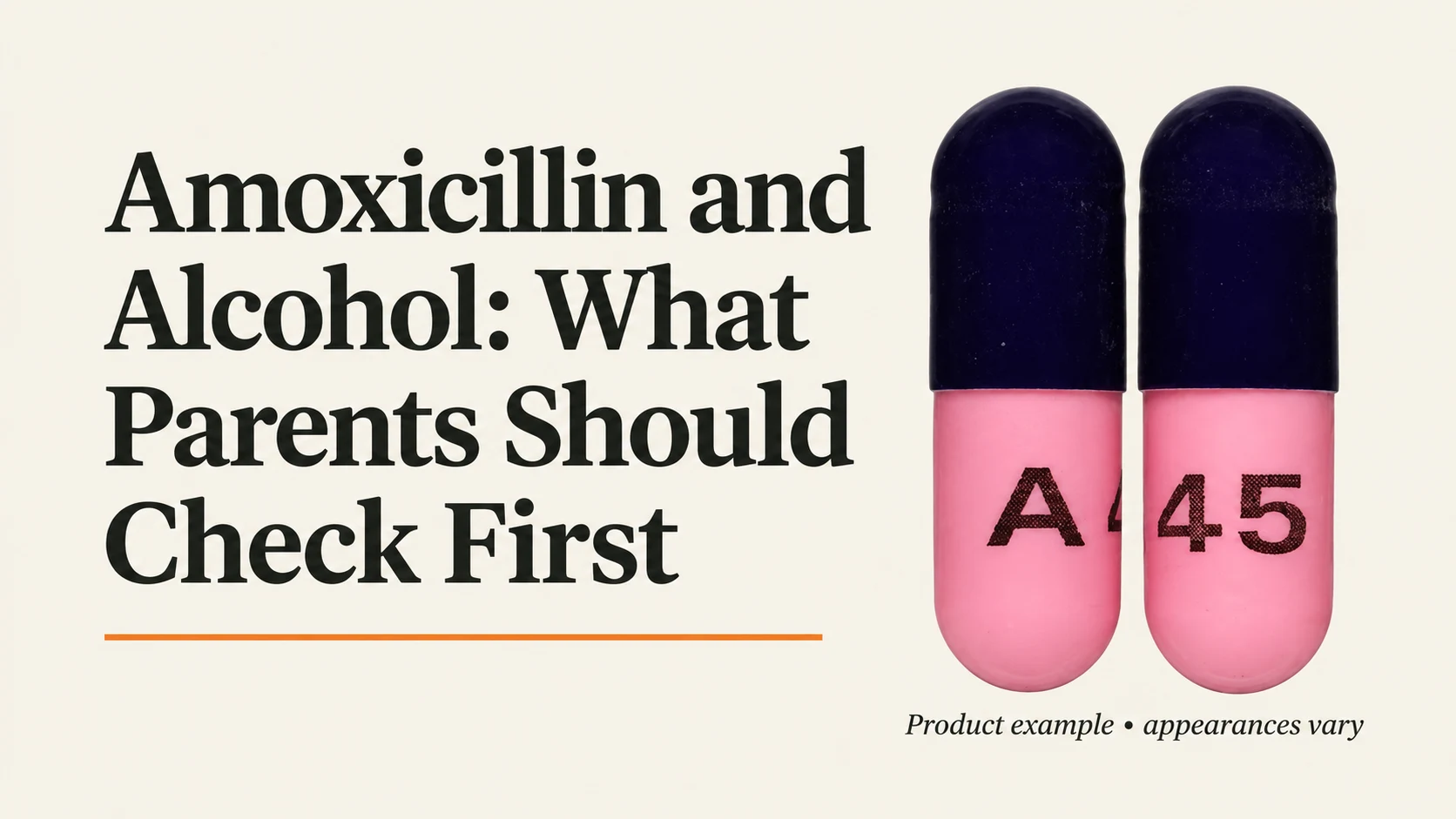
If you or someone you love is taking amoxicillin and still drinking, it is worth understanding both the medication guidance and the risks of alcohol itself. Amoxicillin does not have the same alcohol warning as every antibiotic. But if avoiding alcohol feels difficult—even while you are ill or trying to follow treatment—that deserves an honest conversation about your drinking and the help available.
Key points
- Amoxicillin does not have the same alcohol warning as every other antibiotic.
- The amount of alcohol, symptoms, other medicines, and age still matter.
- Do not skip or change prescribed doses to make room for drinking.
- A pharmacist can check the actual prescription and other products involved.
Get urgent help: Call 911 if your child cannot be awakened, has a seizure, collapses, or has slow or irregular breathing. Do not assume they can sleep off an alcohol overdose. Stay with them and follow the dispatcher’s instructions (National Institute on Alcohol Abuse and Alcoholism, n.d.).
Does alcohol interact with amoxicillin?
NHS guidance states that alcohol can be consumed while taking amoxicillin (NHS, 2025). That narrow medication statement is not permission for underage drinking or reassurance about heavy drinking. It also does not apply automatically to a different antibiotic or a combination prescription. Read the full name on the bottle before using online advice.
For a parent, separate two questions: “Is this a known medicine interaction?” and “Is my child safe after drinking?” A reassuring answer to the first cannot answer the second. Write down the prescription name, strength, dosing instructions, other medicines, and what your child says they drank. Give that information to a pharmacist or healthcare professional.
What to do after you find out
First check whether your child is awake, responding normally, and breathing normally. If severe symptoms are present, call 911. If they are alert and you are uncertain about the combination or amount, contact a pharmacist or Poison Control at 1-800-222-1222. Do not delay emergency help while searching for the medicine bottle.
Avoid improvising a new antibiotic schedule. The NHS advises continuing the prescribed course even when symptoms improve (NHS, 2025). If a dose was missed or vomited, ask the pharmacist what to do for that prescription. Do not double doses or stop treatment based on a social-media answer.
When drinking is affecting your health
If you are drinking while unwell, missing medication, or repeatedly postponing a change you meant to make, be honest with your healthcare professional about the pattern. You can say, “I know I should be taking care of myself, but I am struggling to stop drinking.” You do not need to wait for a crisis or diagnose yourself before asking for an assessment.
If you are concerned about a loved one, choose a calm time to describe what you have noticed and offer help arranging care. Focus on concrete concerns—missed treatment, heavy drinking, or unsuccessful attempts to cut back. The aim is to connect them with help, not to make the conversation about blame.
When this becomes a wider alcohol concern
One medication question cannot establish alcohol use disorder. Repeated blackouts, missed responsibilities, drinking despite harm, or difficulty cutting down deserve clinical assessment. A healthcare professional can evaluate the pattern; parents do not need to apply a diagnosis before asking for help.
If conversations keep becoming arguments, family coaching can help organize concerns and boundaries. When repeated alcohol-related harm is met with refusal of appropriate care, learn how alcohol intervention planning prepares the family for a structured conversation. Medical assessment comes first when symptoms or withdrawal are possible.
Amoxicillin versus other antibiotics: why the exact name matters
A parent may hear “antibiotics and alcohol” and assume there is one rule for the whole group. There is not. Your task is to read the label, rather than infer the drug from the reason it was prescribed or the color of the capsule. If the container lists more than one active ingredient, tell the pharmacist both names.
The table below is a conversation aid, not permission to drink. It keeps three different questions separate so that a reassuring statement about one medicine does not accidentally become reassurance about intoxication or another prescription.
| Question | What to verify |
|---|---|
| Which antibiotic? | Read the full prescription label; do not generalize across medicines. |
| Was alcohol exposure dangerous? | Check symptoms and obtain case-specific advice; a medicine interaction is only one concern. |
| What about the next dose? | Follow the prescription and ask the pharmacist about missed or vomited doses. |
If avoiding alcohol feels harder than expected
You might intend to avoid drinking while recovering from an infection and find that you cannot follow through. That does not change the specific guidance about amoxicillin, but it gives you something important to discuss with a clinician: what happens when you try to stop, and what support might help.
Ask the pharmacist about the prescription and a healthcare professional about the drinking pattern. If heavy drinking or physical dependence is possible, obtain medical guidance before abruptly stopping. These are related concerns with different care needs; neither should be dismissed because one medication does not have a direct alcohol warning.
Questions to take to the pharmacy
Ask which exact product was prescribed, what to do about a missed or vomited dose, and which symptoms require prompt assessment. Mention cold medicines, pain relievers, sleep aids, and other substances. Do not assume that a product is irrelevant because it was bought without a prescription.
Write the answers down in the person’s own care plan. For an adult child, ask what help they want with that plan. For a minor, work with their clinician on age-appropriate supervision. Keep the practical medication discussion separate from any later conversation about household alcohol rules.
What to document if the pattern repeats
Record specific events rather than labels: a missed prescription dose after drinking, an unsafe ride, or a call for help. Include dates when known and distinguish what you observed from what someone else reported. This gives a professional something useful to assess without turning family concern into an accusation.
Do not set out to prove addiction by collecting bottles or scrutinizing every mood. Ask for an assessment when the pattern is concerning. Family support can begin while the medical picture is still being clarified, and a parent can set a boundary without claiming certainty about a diagnosis.
If you or a loved one cannot stop drinking
If alcohol is becoming difficult to control, you do not have to wait for another health scare or a more serious consequence. Start with a qualified medical assessment, especially if you drink heavily or have symptoms when you stop. Treatment can include counseling, medication, and ongoing support suited to your needs (National Institute on Alcohol Abuse and Alcoholism, n.d.).
The Firm helps individuals and families organize the next step. Explore alcohol intervention planning when a loved one continues drinking despite harm and refuses help, family consulting when relatives need a consistent plan, or treatment placement guidance when you are ready to consider care. Contact The Firm to discuss your situation. Medical emergencies and withdrawal require medical care.
Frequently asked questions
Should my child stop amoxicillin because they drank?
Do not change treatment on your own. Ask the pharmacist or prescriber about the actual prescription and any symptoms; seek emergency care for severe symptoms.
Does this advice apply to all antibiotics?
No. Alcohol guidance differs between antibiotics. Confirm the full medication name and ask a pharmacist instead of applying amoxicillin advice to another drug.
Does asking about alcohol mean my child has an addiction?
No. Treat the question as a chance to obtain accurate information. Repeated harm or difficulty controlling drinking warrants a professional assessment.
Talk with The Firm about your family’s next step. This is a consultation service, not emergency medical care.
References
Educational information for parents and families; not individualized medical advice. References checked November 4, 2026.
Drugs.com. (n.d.). Amoxicillin pill images [Photograph]. https://www.drugs.com/amoxicillin-images.html
National Institute on Alcohol Abuse and Alcoholism. (n.d.). Health topics: Alcohol overdose. https://www.niaaa.nih.gov/alcohols-effects-health/alcohol-topics/health-topics-alcohol-overdose
National Institute on Alcohol Abuse and Alcoholism. (n.d.). Treatment for alcohol problems: Finding and getting help. https://www.niaaa.nih.gov/publications/brochures-and-fact-sheets/treatment-alcohol-problems-finding-and-getting-help
NHS. (2025, June 2). Common questions about amoxicillin. https://www.nhs.uk/medicines/amoxicillin/common-questions-about-amoxicillin/