
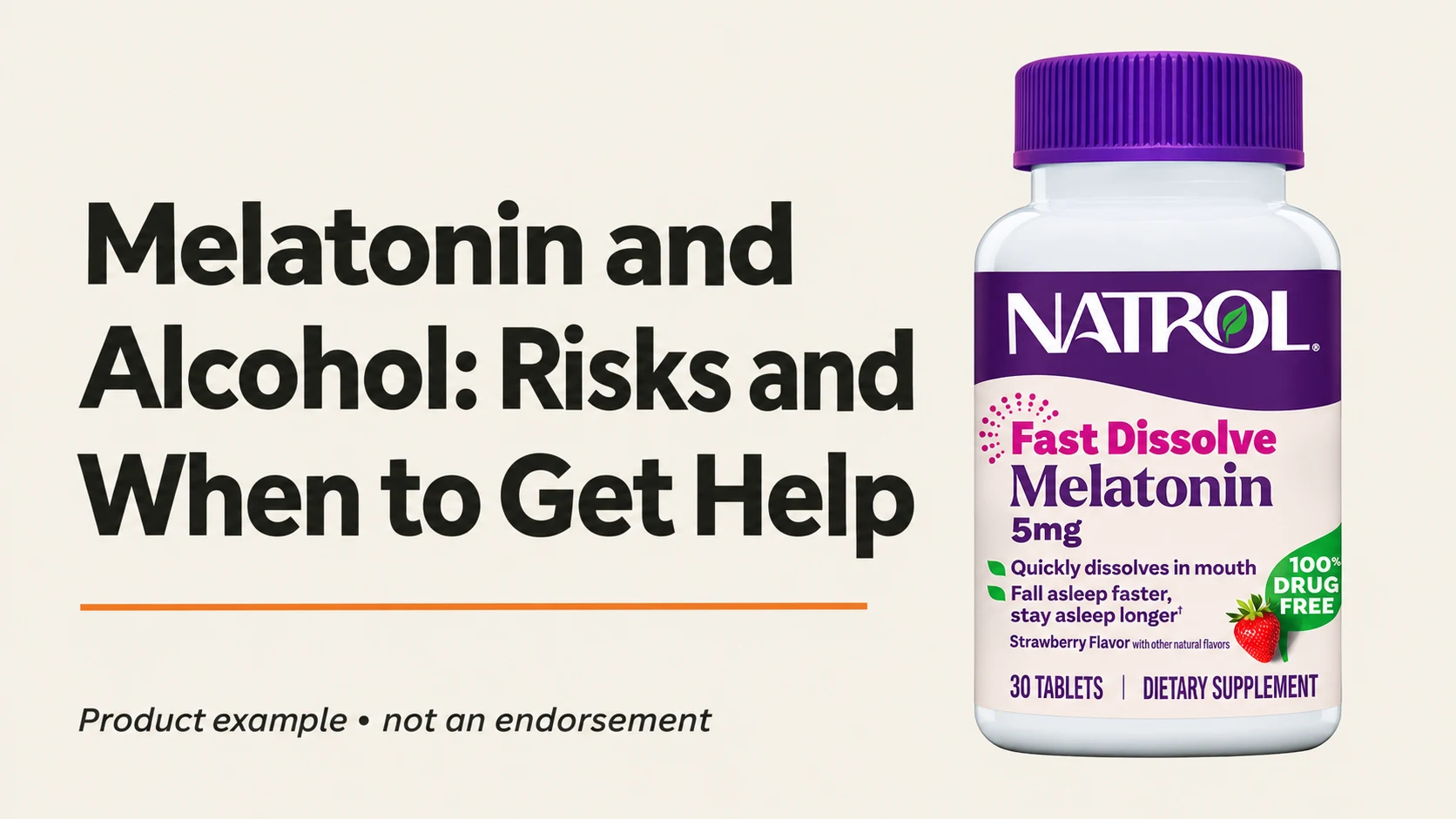
Melatonin and alcohol should not be combined. If you or someone you love drinks regularly and uses melatonin for sleep, understanding the risks matters—even when the products are taken intentionally and seem familiar. This guide explains the warning signs, why adding a sleep aid does not solve an alcohol problem, and where to turn if drinking is difficult to stop.
Key points
- Avoid combining melatonin and alcohol.
- Unusual difficulty waking or breathing problems are emergency signs.
- Keep the packaging so a professional can check every ingredient.
- Ongoing sleep problems deserve assessment rather than more self-medication.
Get urgent help: Call 911 if your child cannot be awakened, has a seizure, collapses, or has slow or irregular breathing. Do not assume they can sleep off an alcohol overdose. Stay with them and follow the dispatcher’s instructions (National Institute on Alcohol Abuse and Alcoholism, n.d.).
Why the combination matters
The NHS advises against drinking alcohol while taking melatonin. The combination can produce very deep sleep, difficulty waking, and problems breathing (NHS, 2023). A parent should not interpret marked drowsiness as evidence that the sleep aid is simply doing its job.
“Melatonin” on the front of a bottle may not answer every question about a product. Read the ingredient panel and keep the container. Tell the clinician or poison specialist about other medicines, supplements, or substances, even if you are unsure whether they matter.
What to do now
If the person cannot be awakened or has abnormal breathing, call 911 immediately. Stay with them and follow dispatcher instructions. Do not leave them alone to sleep off the effects or try to correct the situation with coffee, more supplements, or another medicine.
If they are awake and breathing normally but you are uncertain about the exposure, call Poison Control at 1-800-222-1222. Have the package, approximate amount, timing, age, and symptoms ready if available. Do not postpone the call to reconstruct every detail.
Do not invent a safe waiting period
Parents often want a simple rule about how many hours must separate a drink and a sleep gummy. A universal interval cannot account for the product, amount, other substances, and the person’s health. Ask a pharmacist or clinician about their specific situation rather than turning a general article into dosing advice.
The same principle applies the following evening. Avoid responding to one poor night of sleep by escalating supplements. Ask what the person has been taking and whether a healthcare professional has assessed the sleep difficulty.
When drinking and sleep problems keep reinforcing each other
If you keep drinking despite concerns about sleep or health, adding melatonin does not address the underlying alcohol use. Tell a healthcare professional how often you drink, what you take for sleep, and what happens when you try to avoid alcohol. The goal is a plan for both concerns, rather than layering products to get through the night.
If this describes someone you love, talk about the pattern you see and offer help arranging an assessment. You might say, “I am worried that drinking and trying to sleep are becoming harder to manage. Can we get help figuring out a safer plan?” You can be supportive without taking over their medical decisions.
Connect the concern to appropriate support
Sleep difficulty alone does not establish alcohol use disorder. But difficulty controlling drinking, continuing despite harm, or repeatedly using alcohol alongside sleep products deserves a professional assessment. You do not need to wait for an emergency before asking for help.
Family coaching can help parents discuss concerns consistently. If repeated alcohol-related harm continues alongside refusal of care, alcohol intervention planning offers a structured way to prepare the family response. Those services follow emergency care; they do not replace it.
Melatonin versus other sleep products: read the whole label
A bottle marketed for sleep may contain melatonin, another ingredient, or a combination. Do not assume all sleep gummies or nighttime products have the same contents. The exact label matters when a pharmacist or poison specialist assesses an exposure.
Keep the outer packaging and photograph the ingredient panel if useful. Report the amount actually known rather than converting an uncertain handful into a guessed dose. If several products were used, describe each one. The professional can decide what is relevant; the family does not need to solve the interaction first.
| Label detail | Why to report it |
|---|---|
| Full product name | Similar packaging does not mean identical ingredients. |
| All active ingredients | A product may contain more than melatonin. |
| Amount and timing | Give known facts and identify uncertainty; do not guess a safe dose. |
| Other substances | Include alcohol, medicines, and supplements in the account. |
If you keep drinking even though you want to stop
You may already know that alcohol and melatonin are a poor combination and still find yourself returning to the same routine. The next step is not another workaround or a different sleep product. Tell a clinician that drinking is difficult to control and ask for an assessment that addresses alcohol use and sleep together.
If heavy drinking or dependence is possible, get medical guidance before suddenly stopping. If a loved one is reluctant to seek care, you can still obtain guidance about the family’s response. A clear offer of help and realistic boundaries are more useful than repeating warnings without a plan.
Prepare for a sleep appointment
Encourage your child to describe their sleep schedule, when difficulties began, and everything used to influence sleep or alertness. Include alcohol, supplements, prescription medicines, and products they may not think of as medicines. A short written account can make the visit less stressful.
Ask what changes should be tried, when follow-up should happen, and which symptoms need prompt attention. Do not substitute a parent’s preferred supplement for a professional plan. If your adult child wants privacy, offer help arranging the appointment without demanding access to everything discussed.
Make the household response consistent
Decide where medicines and supplements will be stored and how younger family members can ask questions without fear of immediate punishment. Keep products in their labeled containers. A family safety conversation is easier to use when it includes concrete expectations rather than broad warnings about making bad choices.
If alcohol repeatedly becomes part of attempts to manage sleep or distress, describe the pattern to a healthcare professional. The family can seek help with communication at the same time. Neither a supplement label nor a parent’s worry is a diagnosis; both can be reasons to ask better questions.
If you or a loved one cannot stop drinking
If alcohol is becoming difficult to control, you do not have to wait for another health scare or a more serious consequence. Start with a qualified medical assessment, especially if you drink heavily or have symptoms when you stop. Treatment can include counseling, medication, and ongoing support suited to your needs (National Institute on Alcohol Abuse and Alcoholism, n.d.).
The Firm helps individuals and families organize the next step. Explore alcohol intervention planning when a loved one continues drinking despite harm and refuses help, family consulting when relatives need a consistent plan, or treatment placement guidance when you are ready to consider care. Contact The Firm to discuss your situation. Medical emergencies and withdrawal require medical care.
Frequently asked questions
Can my child sleep it off?
Do not assume deep sleep is safe. Difficulty waking or breathing problems require 911. Ask Poison Control for case-specific advice when you are unsure.
Is a melatonin gummy safer because it is natural?
Natural does not mean risk-free. The alcohol combination and the complete product ingredients still matter.
Should we add another sleep aid if melatonin did not work?
Do not layer sedating products without professional advice. Discuss persistent sleep problems and everything being taken with a clinician.
Talk with The Firm about your family’s next step. This is a consultation service, not emergency medical care.
References
Educational information for parents and families; not individualized medical advice. References checked November 4, 2026.
National Institute on Alcohol Abuse and Alcoholism. (n.d.). Health topics: Alcohol overdose. https://www.niaaa.nih.gov/alcohols-effects-health/alcohol-topics/health-topics-alcohol-overdose
National Institute on Alcohol Abuse and Alcoholism. (n.d.). Treatment for alcohol problems: Finding and getting help. https://www.niaaa.nih.gov/publications/brochures-and-fact-sheets/treatment-alcohol-problems-finding-and-getting-help
Natrol. (n.d.). Fast dissolve melatonin tablets, 5mg [Product photograph]. https://www.natrol.com/products/melatonin-sleep-support-strawberry-fast-dissolve-tablets-5mg
NHS. (2023, February 13). Common questions about melatonin. https://www.nhs.uk/medicines/melatonin/common-questions-about-melatonin/